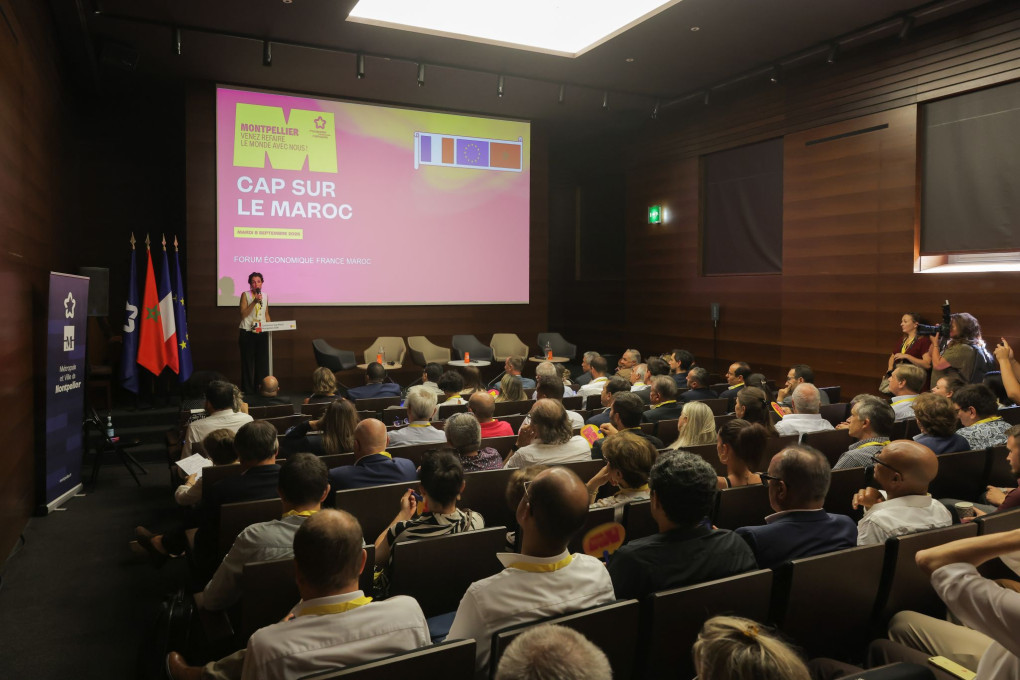
On September 8, the Musée Fabre museum in Montpellier hosted the second edition of Cap sur le Maroc (Destination Morocco), an event organized by Montpellier Méditerranée Métropole, in partnership with AD'OCC, the Occitanie Region, Hérault Chamber of Commerce and Industry, Uni'sons, Consulate General of the Kingdom of Morocco in Montpellier, and CNER.
“Above and beyond our bonds of friendship, we can work together on development opportunities with a shared commitment to economic prosperity, and the creation of wealth and jobs. We believe that Montpellier Métropole can serve as a major gateway to the Kingdom of Morocco in the exchanges between our two countries.” Michaël Delafosse, Mayor of Montpellier and President of Montpellier Méditerranée Métropole
“Our territories have a wealth of experience and expertise to share. It is in our best interest to connect businesses, universities, local governments, and institutions to transform these complementary strengths into meaningful cooperation projects.” Lamiae Bennani, Consul General of the Kingdom of Morocco in Montpellier
New opportunities in a long-standing relationship
Launched ahead of this year's Arabesques festival in Montpellier, the event highlighted the depth of the ties between the two areas, in terms of culture, politics, economics, academia, and people.
This proximity opens new economic prospects in several promising sectors that align with shared priorities such as renewable energy, water management, resilient agriculture, the cultural and creative industries, and digital technology.
Rabat-Salé-Kenitra and Fes-Meknes: two regions to watch
Two regions in particular stand out for their high potential. Rabat-Salé-Kenitra, driven notably by the automotive and battery sectors, combines more than 1,000 hectares of industrial zones with the country’s leading academic hub.
Fez-Meknes, the kingdom’s leading agricultural hub, also benefits from strong investment momentum in industry, energy, tourism, and agribusiness. These are two locations where French companies can find opportunities and benefit from significant support and business-friendly policies.
Water: a major issue and a market full of promise
Accentuated by climate change, the increasing scarcity of water resources has become a structural challenge in Morocco. This situation has spurred the development of innovative solutions, notably the creation of 17 seawater desalination plants. Examples of landmark achievements and avenues for collaboration include wastewater reuse technologies, the interconnection of watersheds — notably a 67-km “water highway” designed and built entirely in just nine months — and numerous adaptations in agriculture.
From renewable energy to green hydrogen
With a power mix comprising 46% renewable energy, Morocco aims to strengthen its energy independence by leveraging its solar and wind potential. One of the key challenges now is to foster the emergence of new industrial sectors around this energy production, particularly green hydrogen and synthetic fuels.
Collaboration projects are already taking shape. MGH Énergies is leading a project to develop two synthetic fuel production facilities — one in Dakhla-Oued Ed-Dahab, in partnership with IRESEN, and another in Laudun-L’Ardoise (Gard department) in the Occitanie region — with the goal of ultimately producing 70,000 metric tons of synthetic kerosene per year. This is a perfect example of the potential of a Euro-Mediterranean “green corridor.”
FIFA World Cup 2030: a catalyst for the economy
Another key issue addressed at this year’s event was the 2030 FIFA World Cup, a soccer tournament co-hosted by Morocco, Spain, and Portugal. Beyond the sporting event itself, it serves as a powerful catalyst for infrastructure, mobility, tourism, employment, and innovation. One of the key challenges will be to also plan for its “legacy” in terms of repurposing facilities, upskilling the workforce, integrating young people into the workforce, and generating sustainable economic benefits. Other avenues for collaboration include developing a sportech ecosystem and leveraging artificial intelligence in sports.
An economic mission to Morocco, led by Montpellier Métropole, is planned for 2027. This marks a new step toward transforming the synergies between the two shores into concrete and sustainable projects.
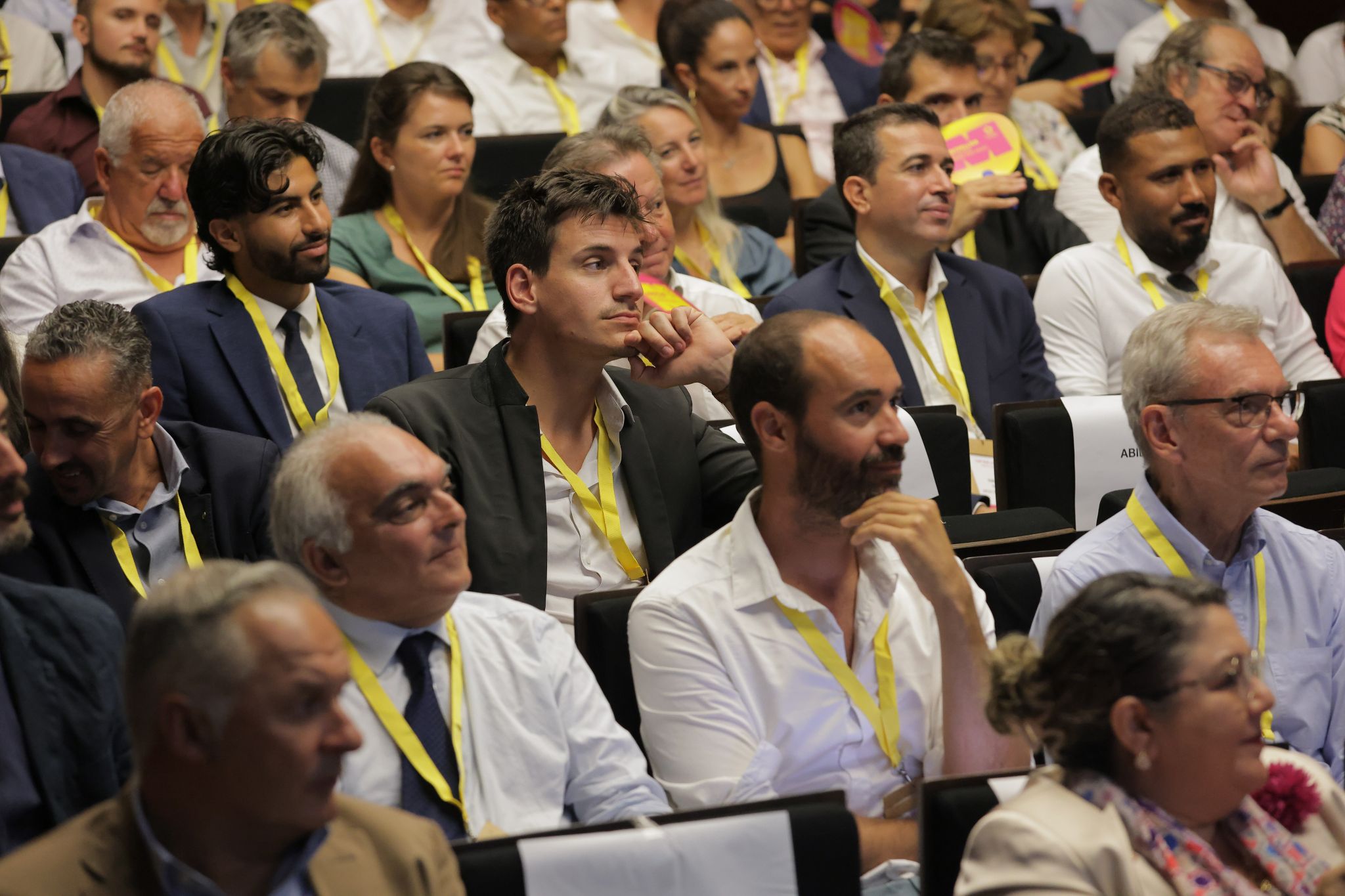
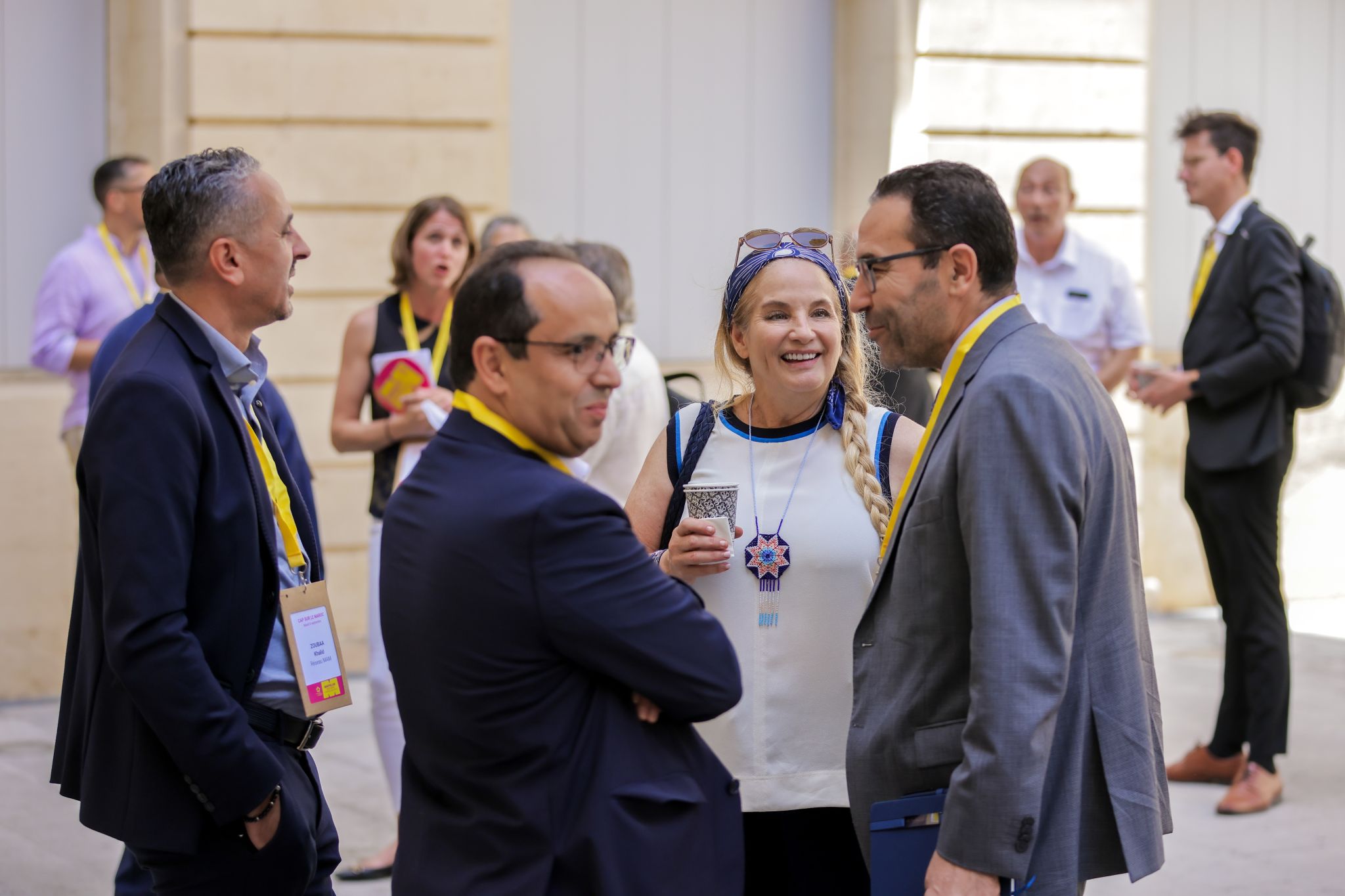
Photo ©Gilles Lefrancq ©3M